Showing posts with label Japan Honshu Kyushu Hiroshima Miyajima Fukuoka Sasebo Nagasaki Shimonoseki Chofu Daizafu. Show all posts

Saturday, January 19, 2019

AFTER "TORA TORA TORA" CAME "LITTLE BOY" AND "FAT MAN" DROPPING ON JAPAN

On 6 Aug 1945 at 8.15 am, Hiroshima heard a shattering explosion never before heard in the World, followed afterward by a huge mushroom cloud that broke out on the skyline. The American B-29 Bomber named "Enola Gay" had executed its mission to drop the bomb and try to bring an end in the Japanese-waged war in Asia and the Pacific. Almost immediately, 66k people died from the effects of the blast and 69k were badly maimed and injured, with many more to die afterwards from burns, radiation and various types of cancer. The bomb was developed under the Manhattan Project with many scientists involved, including Albert Einstein. The scientists were against the use of nuclear energy for war purposes but politicians prevailed and the World was introduced to the first atom bomb in warfare. The bomb, nicknamed "Little Boy", was packed with a power of 15-20  kilotons of TNT, while the one dropped on Nagasaki 3 days later was even more potent. The bombs came after the Japanese attack on Pearl Harbour effectively drawing America, which had maintained a non-aligned stance hitherto. into the war.
 
Genbaku is the name of the dome which has been left intact for 75 years as a poignant testimony to the destructive force of nuclear energy. It was the dome for the Hiroshima Prefectural Industrial Promotion Hall. Genbaku is a part of the Memorial Peace Park dedicated to those who died in the explosion.


A board with details of the fateful day. 

A memorial where locals come and place their offerings to the victims of the bomb.

At a restaurant which serves Okonomiyaki, which is a sort of pancake with veggy and oysters, a dish endemic to Hiroshima.

And the chef was on his way to work.

Although this is not Okonomiyaki, they were starters before the main dish came. All unique to Hiroshima indeed! Chase down with Asahi Dry, one of my favourite Japanese beers.

This bicycle retrieved from the rubble is on display at the museum in the Memorial Park.

Items of children's clothing. On certain days, talks will be given by those who were victims of the war or their descendants on their experiences of the bomb.

Downtown Hiroshima. According to scientists, both cities which were bombed would take about 50 years to be re-developed but Japan got them going within 25. According to writer and academic Kenichi Ohmae, in his book "The Mind of a Strategist", it was possible bec the Japanese government created a venture capital fund of sorts from those who still had valuables left from the war. But, there is another theory that the re-development efforts were greatly abetted by gold and other treasures the Emperor "looted" from Asia during the war and sent to Japan by vessels disguised as hospital ships, some of which were bombed by American aircraft and sunk in Tokyo Bay. Whatever was the source of funding, it was a remarkable job.

The morning commute in Hiroshima. Shot taken from a coffee shop where we had breakfast.

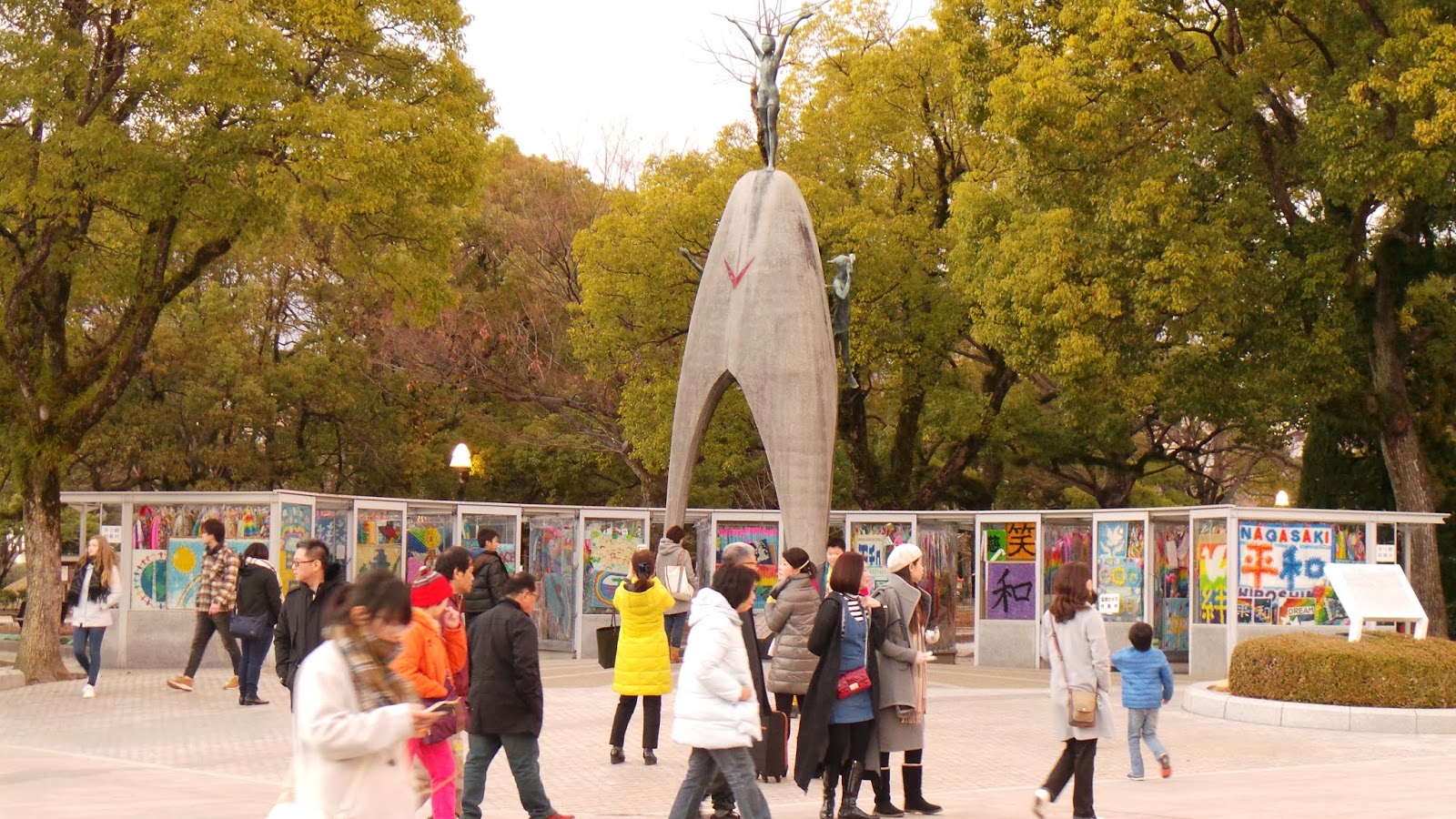
School children behaving well as they wait to cross a road after their visit to the Children's Memorial in the Peace Park.

This is the Children's Memorial in the park

The memorial where President Obama laid a wreath a couple of years back when he visited Hiroshima.

This building is what was the Hiroshima branch of the Bank of Japan. It was affected by the blast and one of the doors of three vaults in the basement was mangled. The staff who worked in the bank died from the effects of the blast. It now serves as a museum and drawings and the writings of people affected by the bomb are displayed in the vaults. I felt kind of eerie walking thru the empty floors.

AFTER "TORA TORA TORA" CAME "LITTLE BOY" AND "FAT MAN" DROPPING ON JAPAN

Shukkei-en is a pretty well-known garden in Hiroshima. Of prominence is the Rainbow Bridge in the distance, captured here with a red bridge in the foreground. A stroll within the well manicured and kept garden is soothing for the mind and soul.

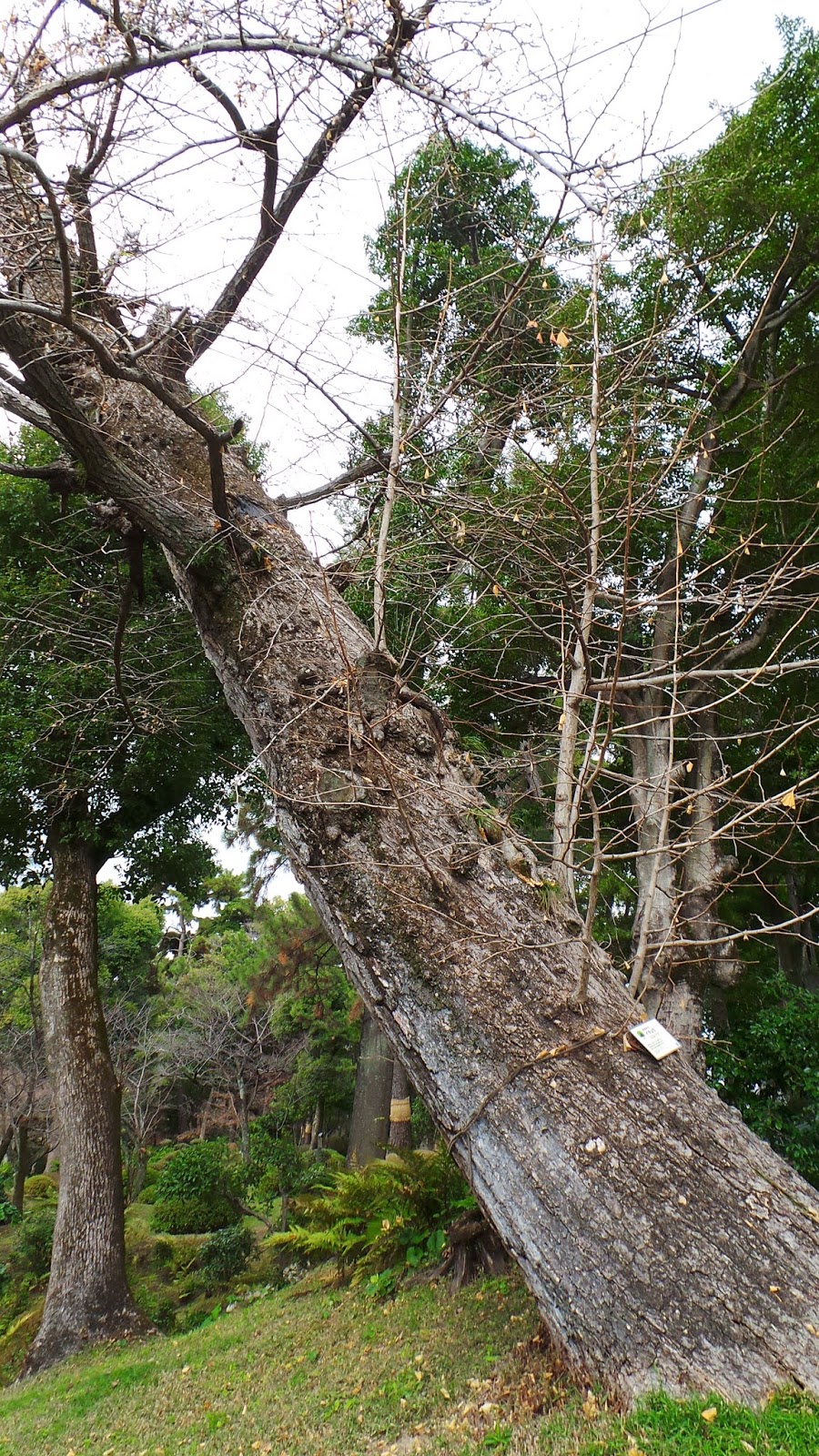
The garden was extensively bombed during WWII but this Ginko Nut tree, about 200 years old, remains standing to this day.

As it could be the private garden of a feudal lord, this piece of land was where his rice was grown. 

The Rainbow Bridge which is well photographed by visitors.

This could be the house of the feudal lord.

Hiroshima Castle was bombed during WWII. What is standing now is a replica built after the war.

Entrance to the castle which has a sprawling ground.

Mt Misen in Miyajima Island has an air of mystique around it.


The iconic floating Torii Bridge of Miyajima.

Shot taken from the island.

A street leading to the Itsushima Shrine of Miyajima. Many of the buildings have been preserved to look feudal.

The Itsushima Shrine which has been granted UNESCO World Heritage Site status. This shrine played a prominent role in days of yore where many ships/boats going to sea will drop by here for seeking safe journeys. They could have entered and exited through the Torii gate for posterity.

Goju-no-to Pagoda, another well known religious site on Miyajima.

AFTER "TORA TORA TORA" CAME "LITTLE BOY" AND "FAT MAN" DROPPING ON JAPAN

Panoramic view of the Seto Sea from the peak of Mt Misen, the highest peak in Miyajima.

Daishon Temple on Mt Misen founded by a Buddhist monk in 806 AD. He is credited with bringing the Eternal Flame (Keizu no-hi) to the temple. The fire used as a pilot light for the Flame of Peace in Hiroshima Peace Memorial Park is lit from the Eternal Flame in this temple.

Riding a rickshaw is one way of seeing the island and it's useful as the puller doubles up as tour guide.

A lone passenger waiting at the bus stop.


Not having made any enquiry, I presume this building to be guest accommodation. 

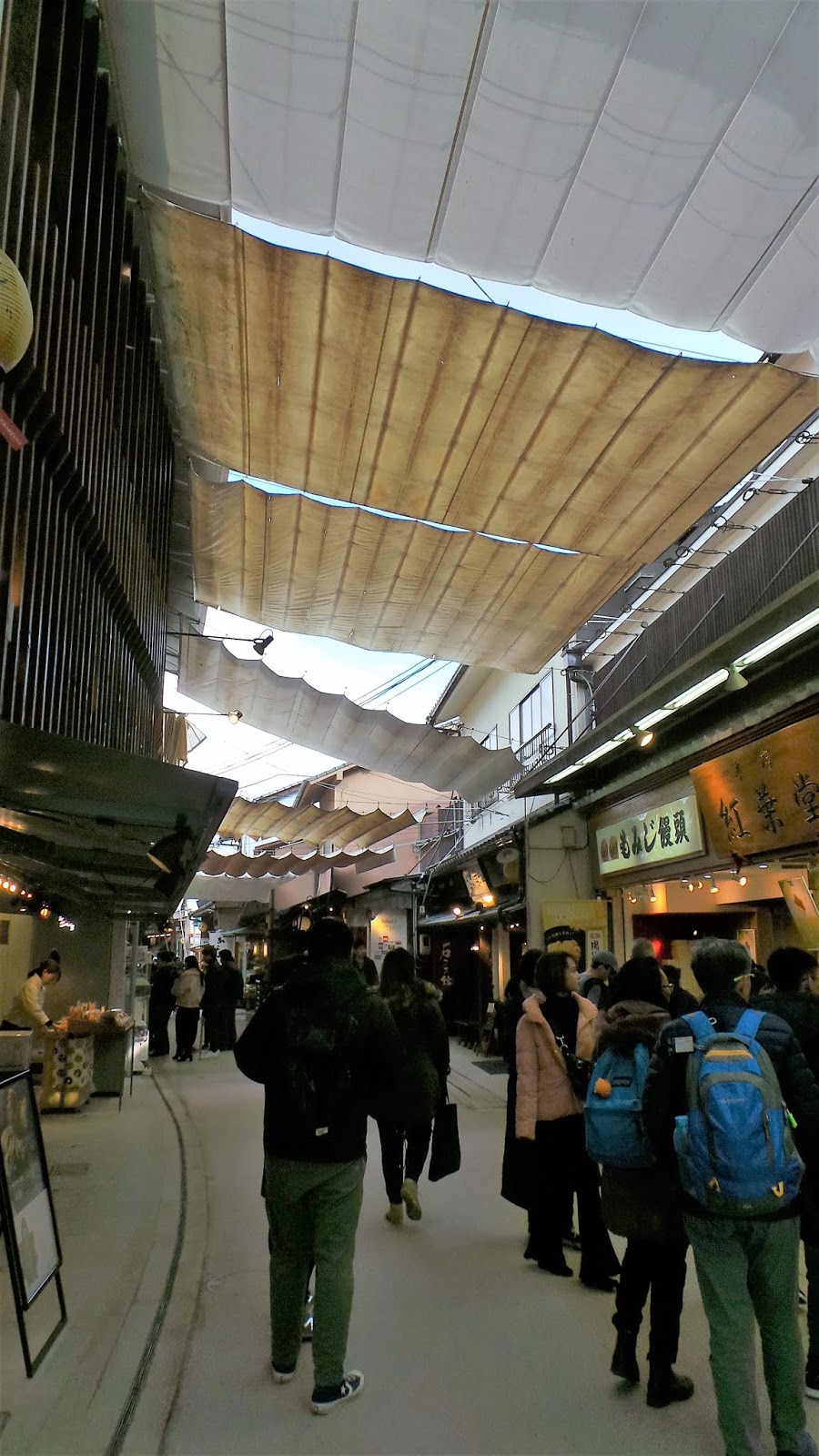
Machiya Street in Miyajima where visitors go to have meals, drinks, snacks or coffee and shop.. This street leads to the village on the island where residents live.

Oysters are especially sweet, juicy and plumb in Nov and December for the colder waters. These fresh ones to be downed with cold Sake, Soju or Highball is pure ecstasy.

Oysters baked with cheese together with other delights. They could also be served barbecued.

Shops in Miyajima fronting the ferry terminal.

This image got me thinking about ageing. This couple represent the Japanese cultural norms like being proper in mannerisms, dressing and behaviour. It also reminds me of the times when the children have grown and started their own families, leaving the old (and at times infirm parents) having to take care of themselves and doing things together again like when they were younger.

And this is the contrast in behaviour norms. In Japan, it's considered improper and even rude to be seen sleeping in public or even walking around while eating. But, the youngster may have been "burned out" by studying, working or on the computer. So, I suppose Japanese societal norms and expectations may have to move with the times?

Four passengers waiting for the next train.

At the Kirin Brewery in Kyushu. The brewery has a bus waiting for visitors at the train station to fetch them to and from the brewery.That's hospitality!

After the brewery tour, it's time for beer tasting. Four types were available. When I was in Sapporo, I thought Asahi Dry was the best Japanese beer. After trying the Kirin Special Brew, I can't quite decide now.  

This WWII aircraft adorns a shop at the train station selling knicks and knacks. A quaint and interesting shop indeed!

Like in Kyoto, where one can hire and be dressed in kimonos to visit Gion, here these two young ladies did the same to visit Daizafu. The one on the left is from HK visiting her friend in Kyushu. Can you tell them apart?

We videoed and photographed him without leaving something in his bowl and he looked visibly upset!

AFTER "TORA TORA TORA" CAME "LITTLE BOY" AND "FAT MAN" DROPPING ON JAPAN

The Torii gateway to Daizafu (Big Buddha) Shrine, the biggest in Kyushu. The monk is begging for alms (cash). 

Root of a tree resembling a dragon's claw.

Sprawling grounds of the Daizafu Shrine. 

I presume there is a big Buddha in the temple.

Three school girls happy possibly that their marriage prospects will be bright.

The ticket booth and escalator leading to the Kyushu National Museum Daizafu showcasing Japan's history of cultural exchanges with Asian and European countries.

A big temple deserves an equally big lantern.

Ramen in the most famous ramen restaurant of Fukuoka.

And their offering of gyoza.

One of the young staff of the restaurant. Many shops and food joints are staffed by the younger set of Japanese.

Hilton Fukuoka Sea Hawks in Fukuoka. Possibly, they used the name "Sea Hawks" as they are sited next to the Sea Hawks Stadium. Sea Hawks are a Baseball Team playing in the Premier Baseball League in Japan. Couldn't catch a game as Baseball was then out of season.

Many people visit Fukuoka for shopping and dining as it's the most contemporary city in Kyushu . To cater for them, Canal City was developed as a high-end shopping mall, based the theme of a shopping mall built around a man-made canal.

A chick shopping mall attracting many young people. 

"Yatai" means street food in Fukuoka dispensed from small stalls along a canal and also in other locations in the city. Many visitors will seek it out for the novelty of eating within a confined space where customers are seated tightly on benches. Many search sites will caution readers that although it's only street food, yet the prices are as high as those charged in restaurants. But, when does one visit Fukuoka so it's well worth to give the food and experience of outdoor dining a try.

At the stall I patronised, the boss looks like a renowned actor or singer. See the customers seated next to each other.

My serving of noodles to be downed with cold Soju!

A combo of barbecued meat and beef balls.